
© Roman Eisele / Wikimedia Commons / CC BY-SA 4.0
.

On this page, you will find a collection of links to scientific publications that are relevant to this project or that can contribute to a deeper exemplary understanding of the processes and circumstances that may be related to the Reinterpretation of Germania Magna presented here. These publications span different research areas.

The collection includes:

  • Primary literature: Scientific publications presenting the results of new research.
  • Secondary literature: Scientific publications summarizing, analyzing, or interpreting primary literature.
  • Comparative literature: Publications that exemplify similar processes and circumstances in other contexts.
  • Additional resources: Links to websites, databases, and other resources that may be relevant to the reinterpretation

The following publications are intended to help answer specific questions exemplarily, which may be related to the necessary processes and events required for extensive landscape transformation. These include considerations of tectonic fracture events and rift systems, with corresponding effects on maritime landslide events and the formation of new sedimentation basins.


Foraminifera in the glacial erratic rock Sternberger Gestein from northern Germany
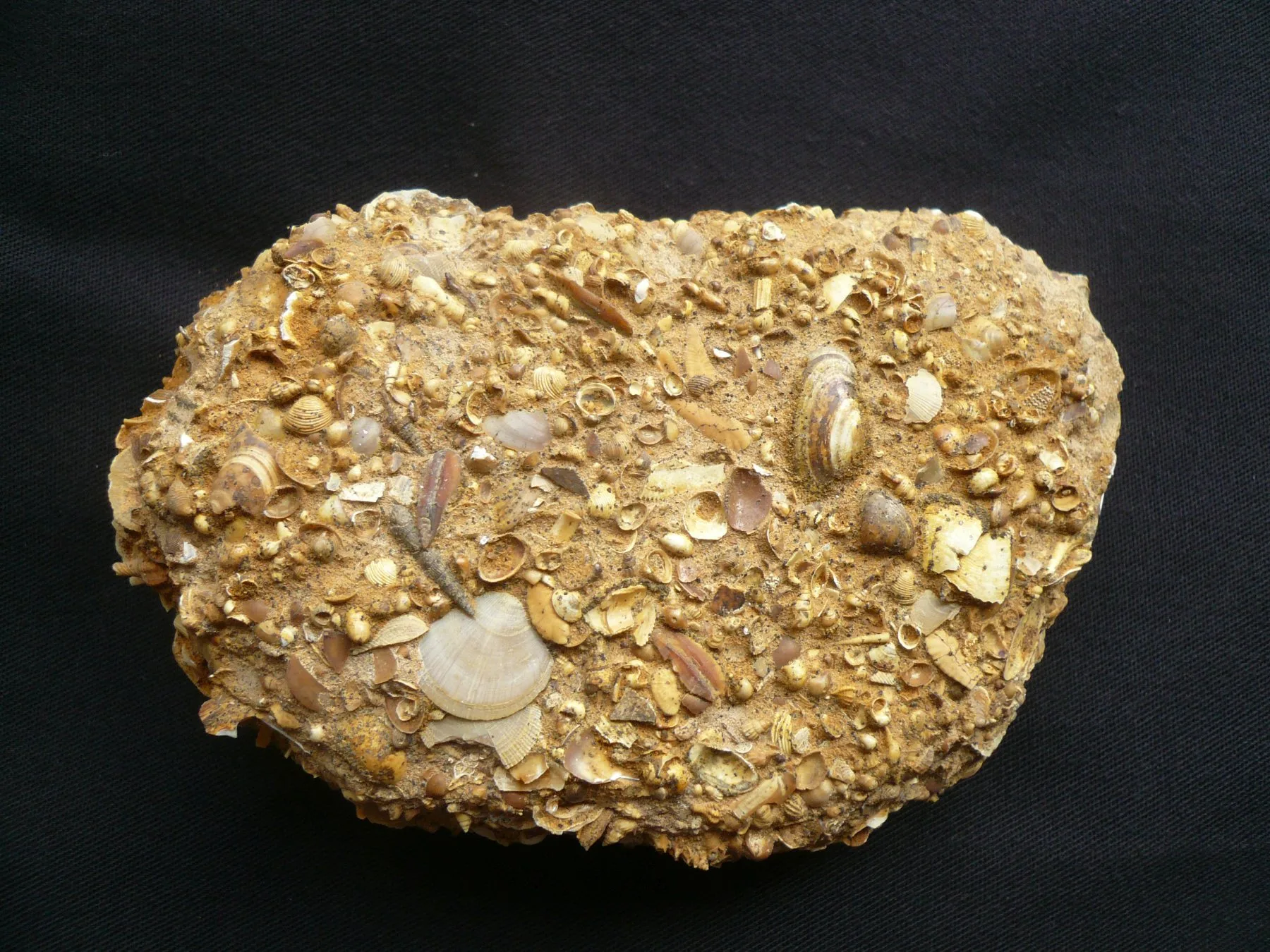

„Sternberger Kuchen“, ein vom Transport durch Eis und Wasser geformtes Stück Gestein der proximalen Tempestitfazies der Sülstorf-Schichten, File:StadtmuseumBerlin GeologischeSammlung SM-2012-4234.jpg. (2022, December 6). Wikimedia Commons. Retrieved 00:43, February 4, 2025 from https://commons.wikimedia.org/w/index.php?title=File:StadtmuseumBerlin_GeologischeSammlung_SM-2012-4234.jpg&oldid=712956671.

DOI http://dx.doi.org/10.61551/gsjfr.54.3.249 Abstract This study is part of a project that aims to provide the first comprehensive analysis of foraminifera in glacial erratics. Such studies may be used to clarify the origin of glacial erratics and serve as indicators of the direction of glacial movements. The glacial erratics, which were deposited during the Pleistocene Ice Ages, cover vast areas in northern Germany and beyond. The origin of erratics with fossil content can be clarified by correlating them with undisturbed strata. The foraminiferal assemblages of 21 pieces of the glacial erratic Sternberger Gestein (SG) are documented and illustrated. A total of 82 foraminiferal taxa were found, of which 69 taxa were illustrated, representing 97% of the counted specimens. Cluster analysis and analysis of similarities were used to determine the affinities between pieces. Based on previous borehole studies, the fauna in the SG pieces can be correlated regionally with the Palmula oblonga … Read moreForaminifera in the glacial erratic rock Sternberger Gestein from northern Germany
A submerged Stone Age hunting architecture from the Western Baltic Sea


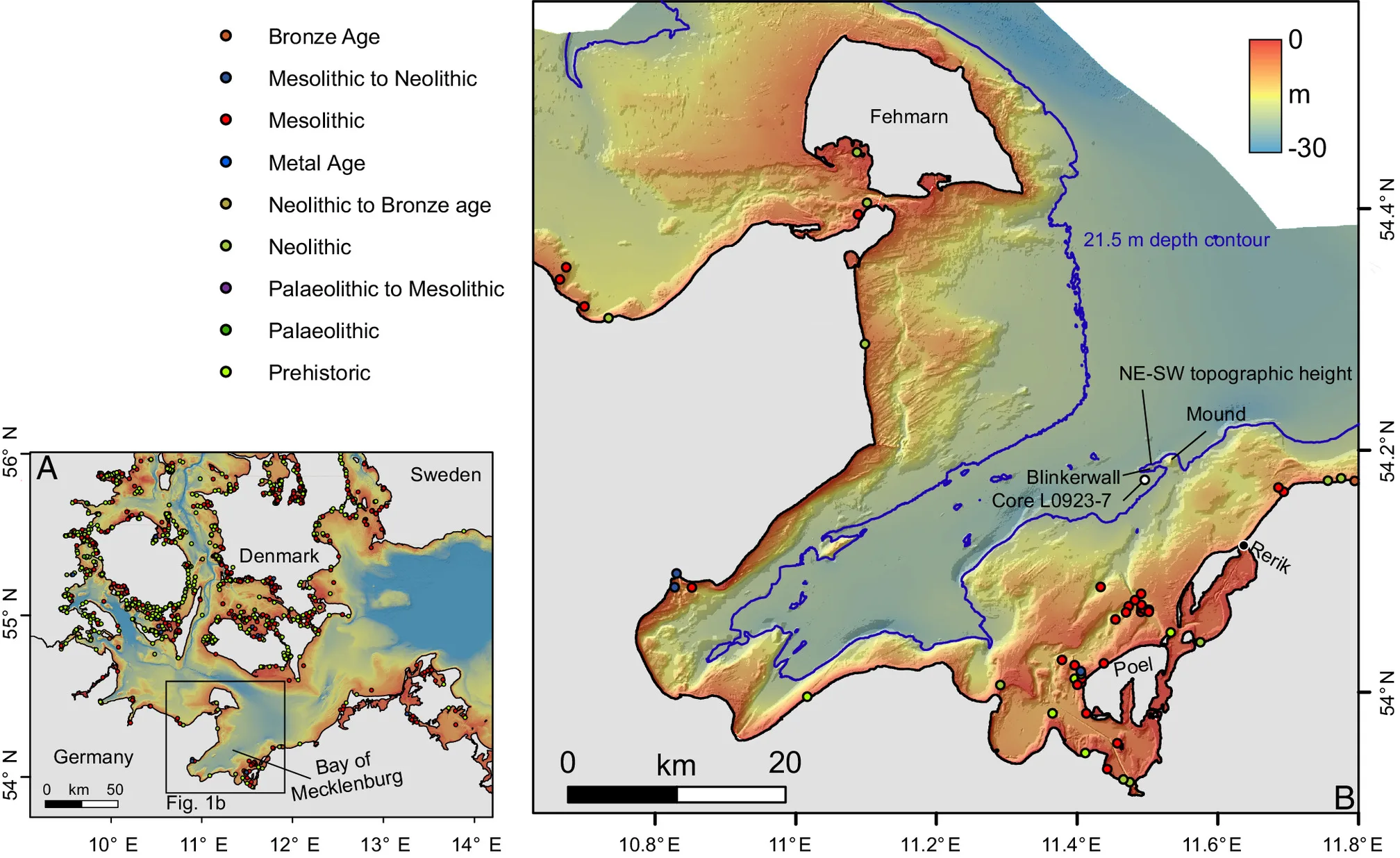
Geersen, Jacob & Bradtmöller, Marcel & Schneider von Deimling, Jens & Feldens, Peter & Auer, Jens & Held, Philipp & Lohrberg, Arne & Supka, Ruth & Hoffmann, Jasper & Eriksen, Berit & Rabbel, Wolfgang & Karlsen, Hans-Jörg & Krastel, Sebastian & Brandt, David & Heuskin, David & Lübke, Harald. (2024). A submerged Stone Age hunting architecture from the Western Baltic Sea. Proceedings of the National Academy of Sciences of the United States of America. 121. e2312008121. 10.1073/pnas.2312008121.

DOI https://doi.org/10.1073/pnas.2312008121 Abstract The Baltic Sea basins, some of which only submerged in the mid-Holocene, preserve Stone Age structures that did not survive on land. Yet, the discovery of these features is challenging and requires cross-disciplinary approaches between archeology and marine geosciences. Here, we combine shipborne and autonomousunderwater vehicle hydroacoustic data with up to a centimeter range resolution, sedimentological samples, and optical images to explore a Stone Age megastructure located in 21 m water depth in the Bay of Mecklenburg, Germany. The structure is made of 1,673 individual stones which are usually less than 1 m in height, placed side by side over a distance of 971 m in a way that argues against a natural origin by glacial transport or ice push ridges. Running adjacent to the sunken shoreline of a paleolake (or bog), whose youngest phase was dated to 9,143 ±36 ka B.P., the stonewall was likely used … Read moreA submerged Stone Age hunting architecture from the Western Baltic Sea

Fault system evolution in the Baltic Sea area west of Rügen, NE Germany


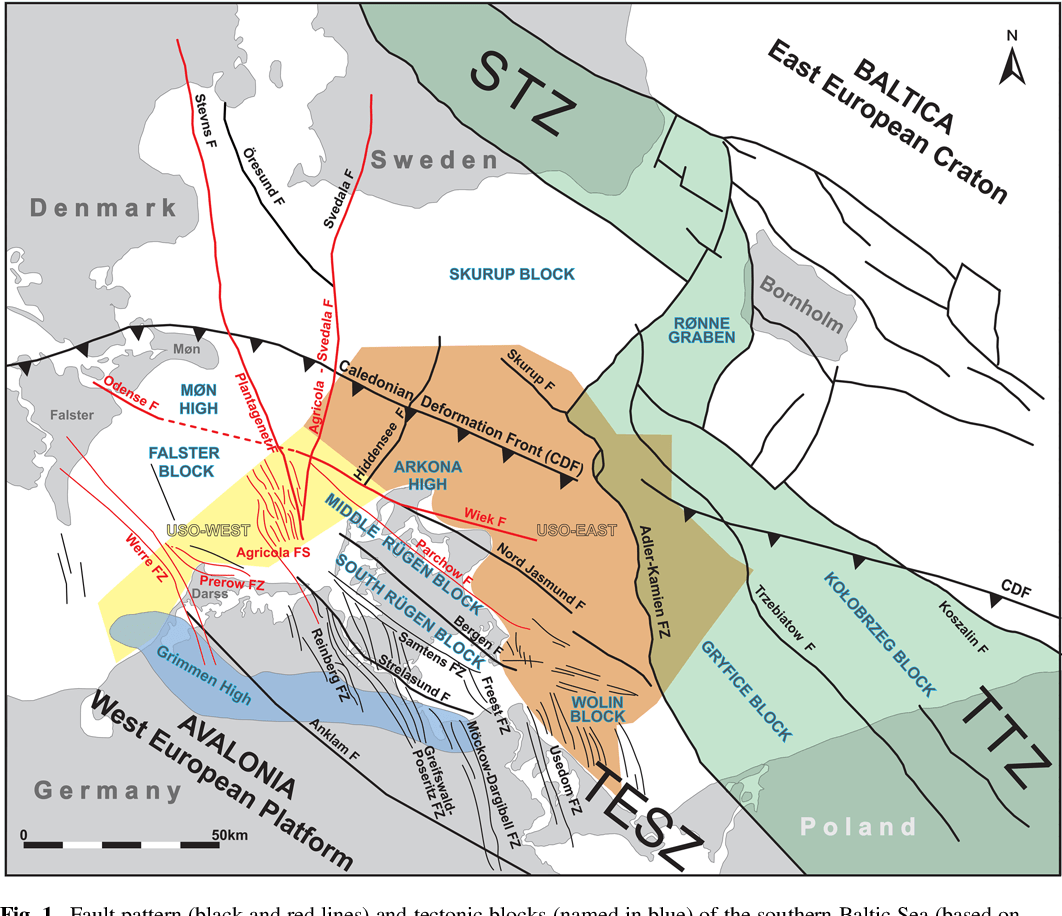
Deutschmann, Andre & Meschede, Martin & Obst, Karsten. (2018). Fault system evolution in the Baltic Sea area west of Rügen, NE Germany. Geological Society, London, Special Publications. 469. SP469.24. 10.1144/SP469.24.

DOI https://doi.org/10.1144/sp469.24 Abstract Based on reprocessed offshore seismic lines acquired during oil and gas exploration in the 1980s, we reconstruct the formation and reactivation of major fault systems in the southern Baltic Sea area since the late Paleozoic. The geological evolution of different crustal blocks from the Caledonian Avalonia-Baltica collision until the Late Cretaceous-Paleogene inversion tectonics is also examined. The detected fault systems occur in the northern part of the Trans-European Suture Zone (TESZ) and belong either to the late Paleozoic Tornquist Fan or to the complex Western Pomeranian Fault System (WPFS) generated during Mesozoic extensional movements. While the NW- SE-trending deep Wiek Fault separates the Arkona High from the Middle Rügen Block, the NNW-SSE-trending Agricola Fault demarcates the Middle Rügen Block to the Falster Block in the west. Together with the Plantagenet Fault and numerous younger faults in the Mesozoic cover, it forms the Agricola Fault System. Furthermore, structural … Read moreFault system evolution in the Baltic Sea area west of Rügen, NE Germany

x  Powerful Protection for WordPress, from Shield Security
This Site Is Protected By
Shield Security